FluentPet Dog Buttons
Talking Buttons for Dogs
Give your dog a way to tell you what they want: a game of tug, a snack, a scratch behind the ears. Recordable dog communication buttons, built for paws of every size.
Why Dog Buttons?
A Say in Their Own Day

Choices, Not Just Commands
Most of a dog's day runs on our schedule. Dog buttons hand some decisions back: which game, which snack, more couch time with you.

A Workout for the Brain
Figuring out that a press makes something happen is real problem-solving. It's enrichment that fits into a few minutes a day.

Listening Goes Both Ways
You'll learn which games your dog likes best. Your dog learns that when they ask, you answer. That trust is the heart of it.
Do Dog Buttons Really Work?
What the Research Says So Far
Scientists are studying exactly this, and the early results are fascinating. In a 2024 study in PLOS ONE, researchers at UC San Diego found that dogs responded appropriately to words like "play" and "outside" on their buttons, even when a stranger pressed them and no one gave any other cues. A second 2024 paper in Scientific Reports, looking at a large set of real button presses, suggests dogs' presses aren't random and aren't simple copies of their humans' presses.
Research is still young, and every dog is different. Read our founder's take as a cognitive scientist: Do dog buttons really work?

Real Dogs, Real Buttons
Meet Two Dog Button Learners
Sam, a Chihuahua mix
Sam's first press came about a month in, after a quiet patch when he seemed to lose interest. One day he wandered to his three-button board, pressed FRISBEE, and looked up as if a toy would come flying. He has since come up with combinations his teacher never modeled, like NO BALL TREAT MORE.
Maple, a German Shepherd
Maple pressed her first button the day she started, at three months old. When her ball rolled under the couch, she pressed BALL, WHERE, HELP and the name of the kid sitting nearby.
How Dog Talking Buttons Work
Three Steps to Your Dog's First Word


Pick Three Words Your Dog Loves
Start with one food word, one play word and one affection word, like SNACK, TUG and SCRITCHES. Use the words your household already says. A single piece of their regular kibble is all the snack you need.
Press It, Then Make It Happen
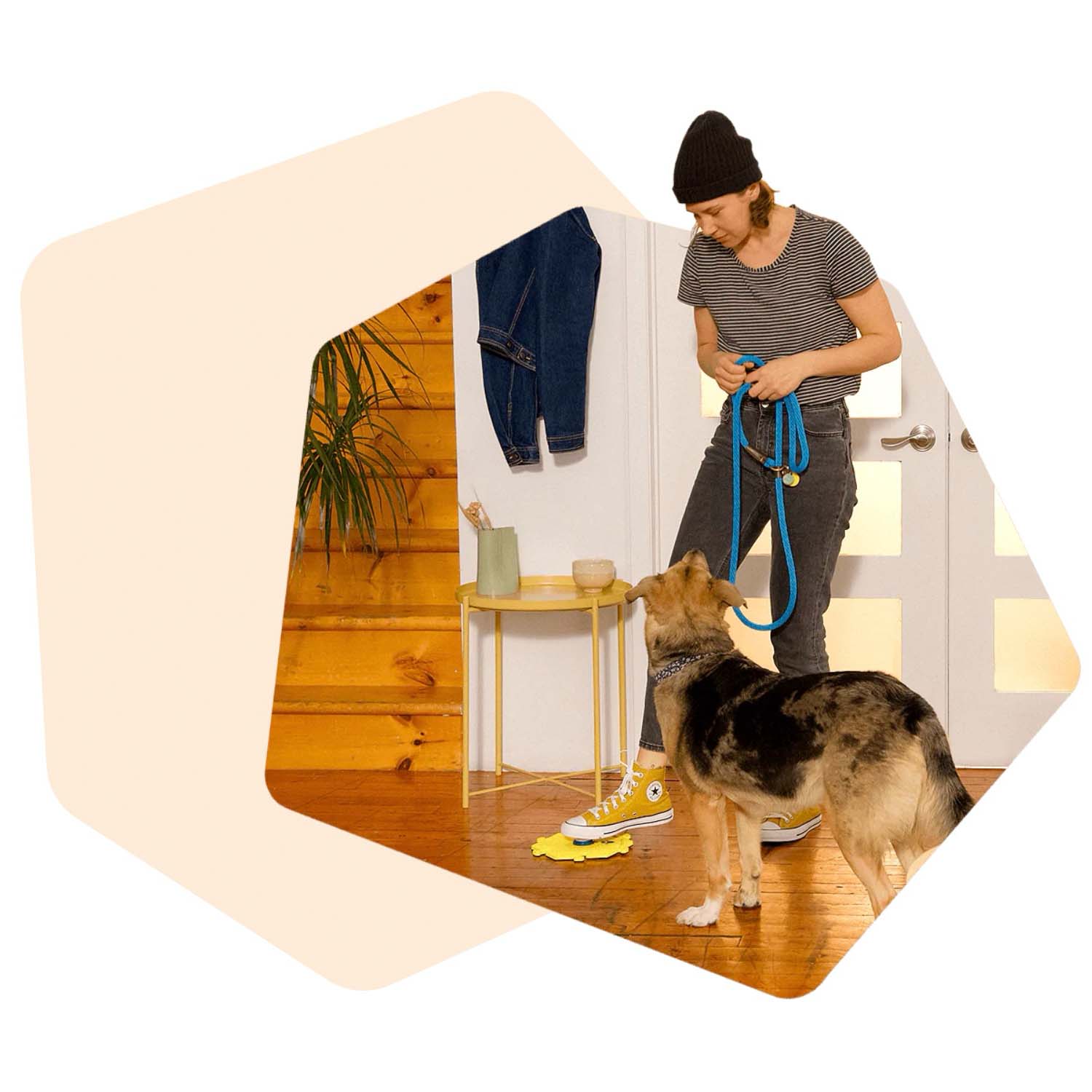
Press the button, say the word, and deliver right away. Quick back-to-back rounds help (around 30 a day, which takes just a few minutes), plus pressing whenever it comes up naturally.

Answer Every Press
When your dog presses, say yes as fast as you can, even if it looks like an accident. Every answered press tells them the buttons work.
What to Expect
Your Dog's First Month with Buttons
Every dog moves at their own pace. Here's what many teachers notice:
- Week 1: your dog watches you and the board. They may sniff a button or look at it when you say its word.
- Week 2: they respond to your presses, heading for the tug toy when you press TUG. Accidental presses start to happen. Celebrate them!
- Weeks 3–4: some dogs make their first press on their own, often for a favourite word. Others are still watching, and that's completely normal.
Lots of pressing on one button means it really matters to your dog right now. Answer it. It's often a clue to the next button.
Why FluentPet?
Dog Buttons Designed by Cognitive Scientists
FluentPet was started by cognitive scientists from UC San Diego, and it's the button system behind Bunny and thousands of other learners.

Light Enough for Little Paws
Speak Up! buttons need only about half a pound of pressure (200–250 g), so even toy breeds can press them.

Buttons That Stay Put
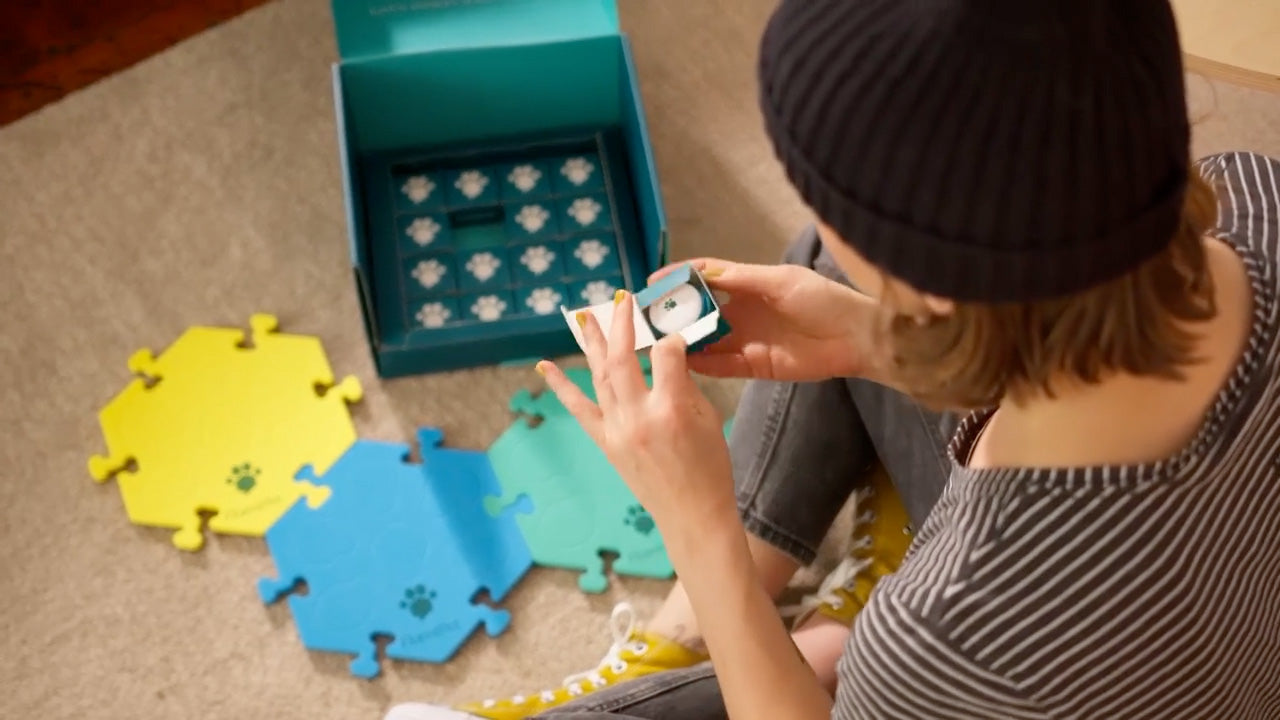
HexTiles hold each button in place, even under a big paw. The foam is washable, and tiles lock together as the board grows.

Hear It from the Next Room
The speaker sits on top of every Speak Up! button, so a press is loud and clear wherever you are in the house.

Know When They Press
FluentPet Connect sends a notification to your phone when your dog presses, even when you're not at home.

Grows with Them
Start with three words, then add buttons and HexTiles as your dog's vocabulary grows.

Live Help Included
Every kit includes a free live Button Bootcamp (over 30 minutes), plus our teacher community.
Choosing a Kit
Find the Right Dog Button Kit
Whichever kit you choose, start with three buttons. The extras wait for your dog's next favourite word.

Curious, Not Sure Yet
TESTER KIT
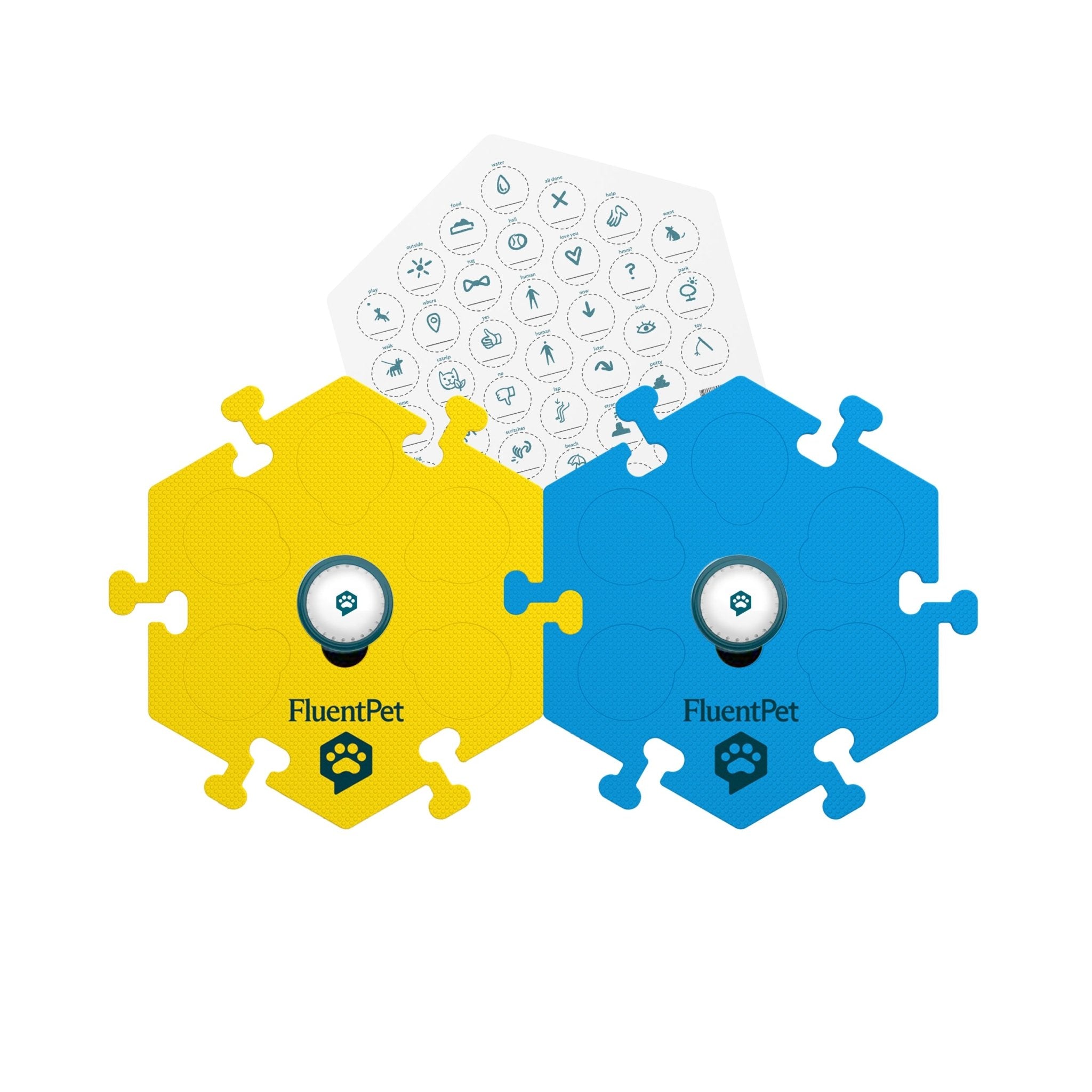
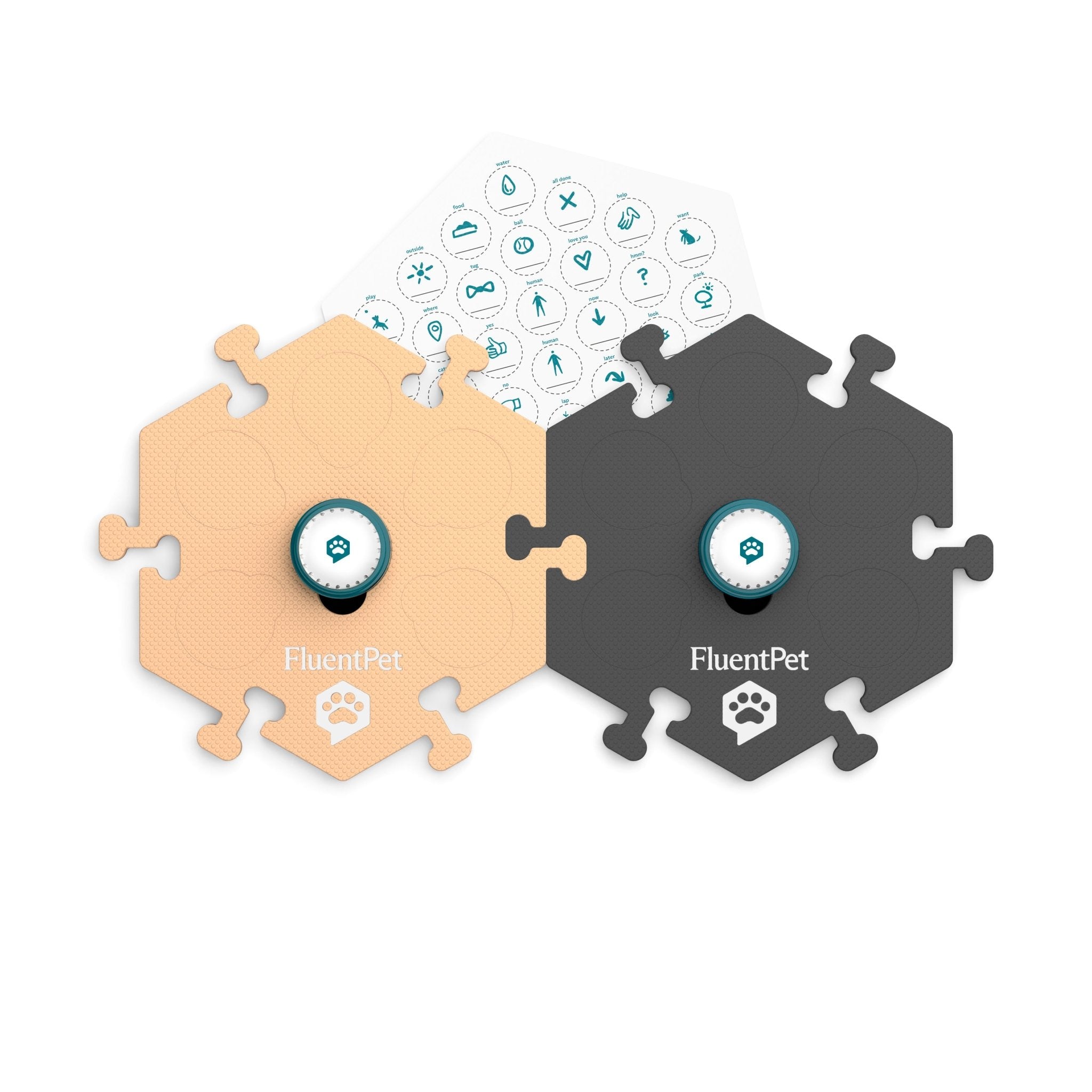
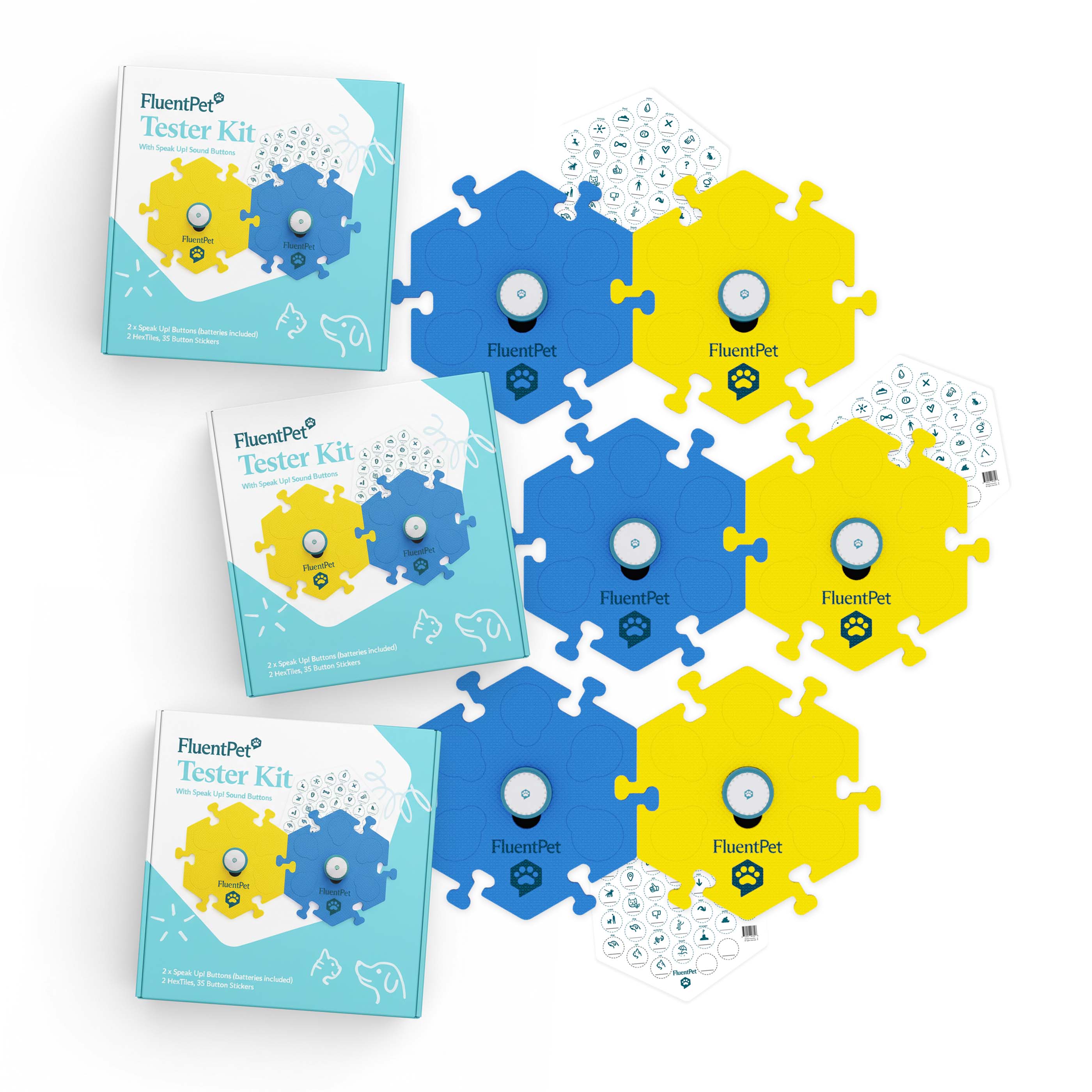
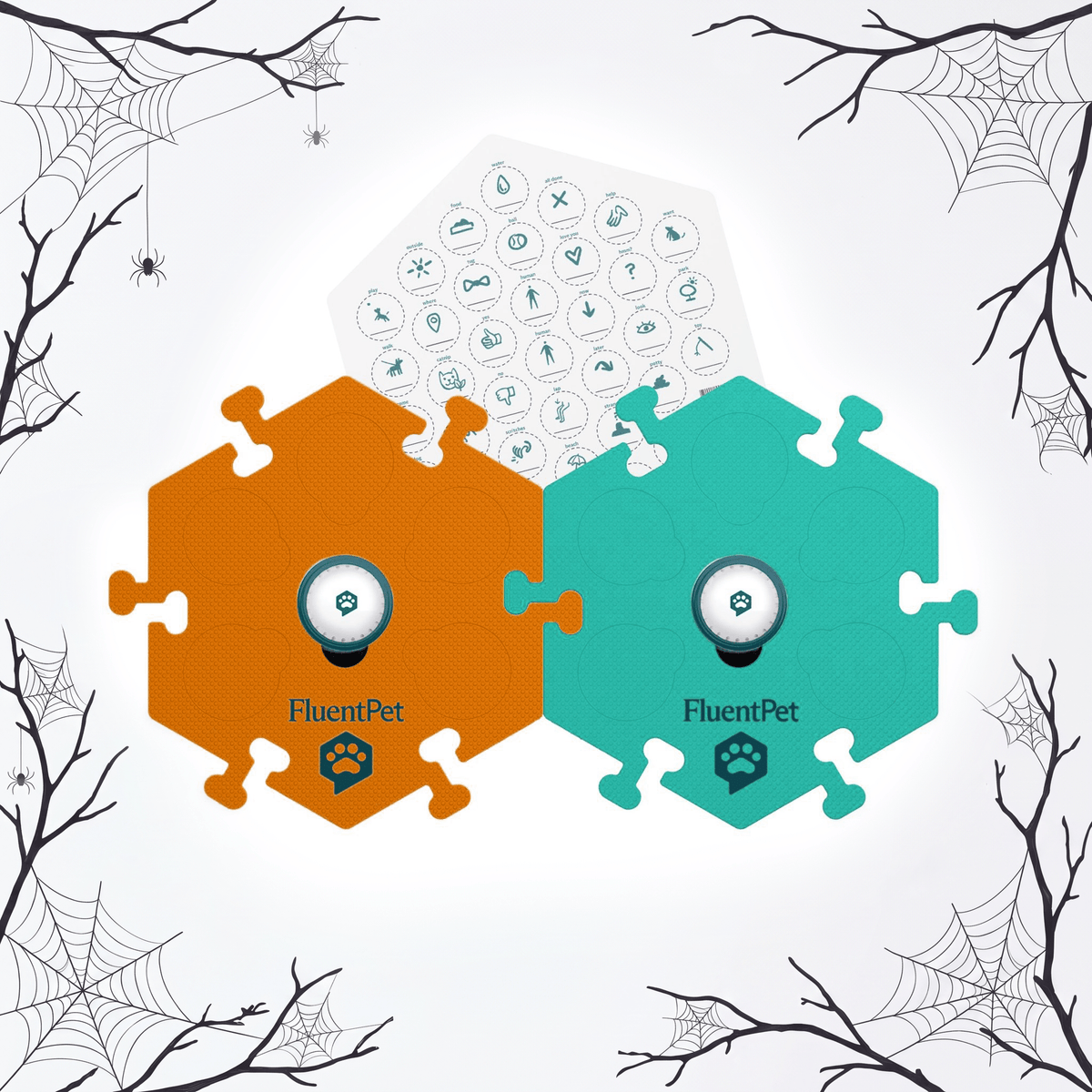
Two Speak Up! buttons and two HexTiles: a low-key way to see how your dog takes to buttons.

Ready to Start
GET STARTED KIT
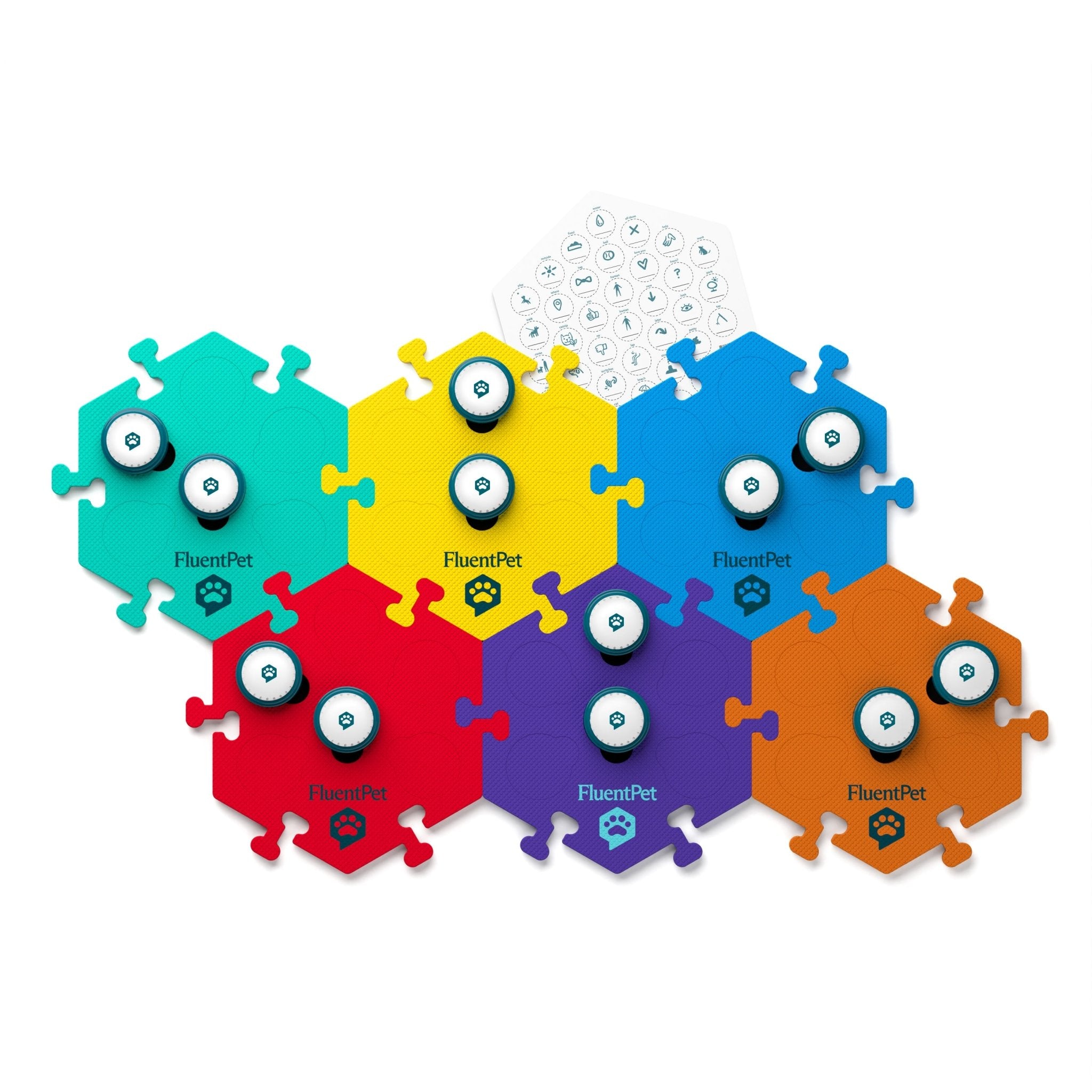
Six buttons and three HexTiles: your three first words, plus room to grow once your dog presses on their own. Our most popular way to begin.

Two Dogs, or Big Plans
KEY VOCAB KIT
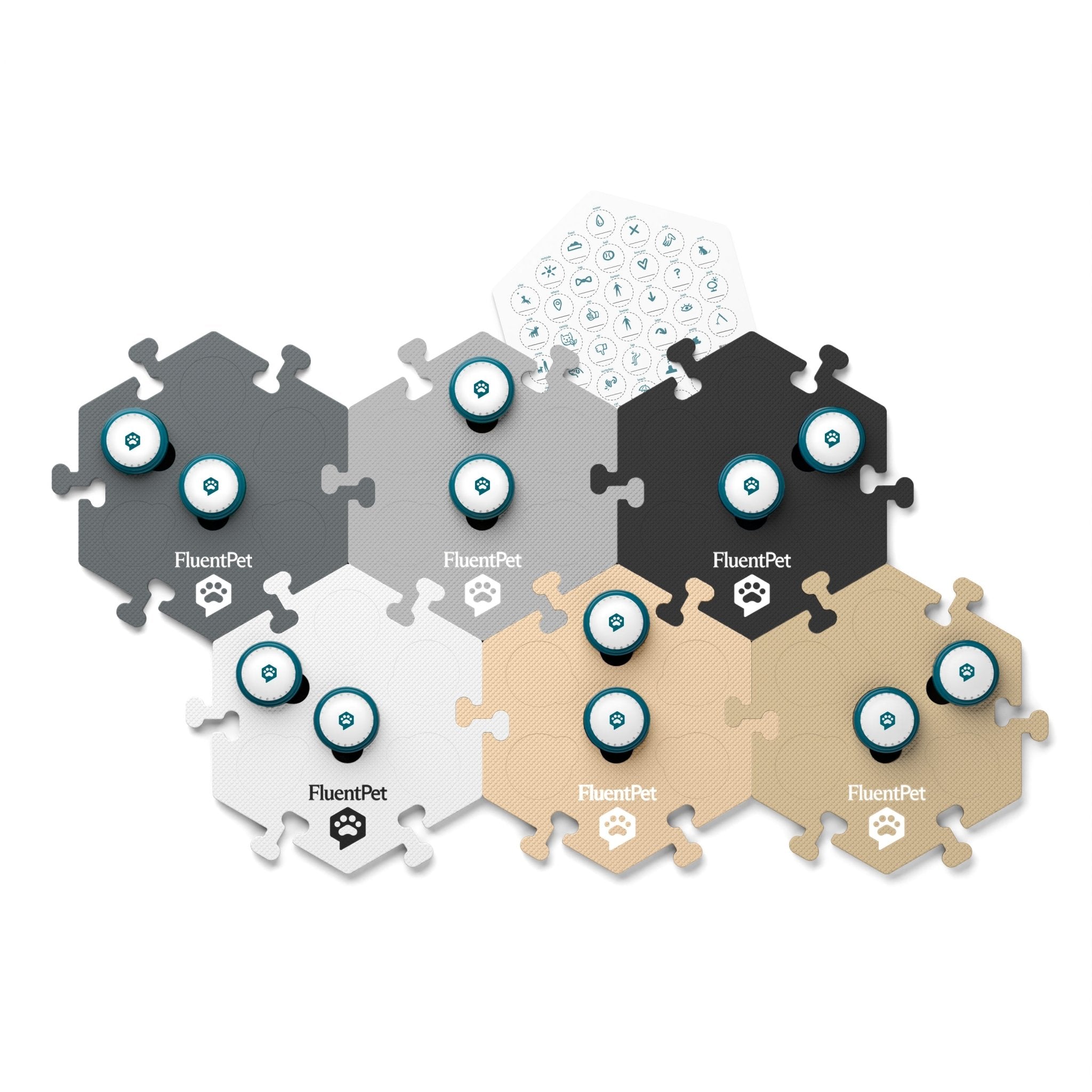
Twelve buttons and six HexTiles. Enough for a two-dog home, or for teachers who already know their dog will have a lot to say.
Dog Button FAQ
Questions Dog Teachers Ask Us
Do talking buttons for dogs really work?
Research suggests so. Two 2024 studies found dogs respond appropriately to the words on their buttons and press them in non-random ways. Results still depend on consistent modeling, and every dog is different.
Is my dog too small, or too big, for buttons?
Probably not! Buttons need only about half a pound of pressure, and HexTiles keep them from sliding under big paws. Our learners range from Chihuahua mixes to German Shepherds.
What should my dog's first buttons be?
One food, one play and one affection word, ideally things your dog loves that you can deliver any time. We don't suggest starting with OUTSIDE or WALK. Your dog already has ways to ask for those, and you can't always say yes on the spot. They make great second-round words.
Can a puppy learn to use buttons?
Yes. Maple started at three months. Keep sessions short and fun, and follow your puppy's energy. Adult dogs learn too. Whatever their age, go at their pace.
Will my dog press buttons all day long?
Some dogs go through a very enthusiastic phase! Answer it, look for the need behind it, and consider a "let's do something else" button, like PUZZLE or CHEW. Please don't take the board away: that ends the conversation.
I have two dogs. Do they share a board?
They can! Start both on the same three words. If one races ahead, a second board or separate sessions give the other room to catch up.
Do I need training experience?
Not at all. Most of our teachers have none. Every kit includes a free live Button Bootcamp (over 30 minutes), plus a community of experienced dog teachers.
Featured collection